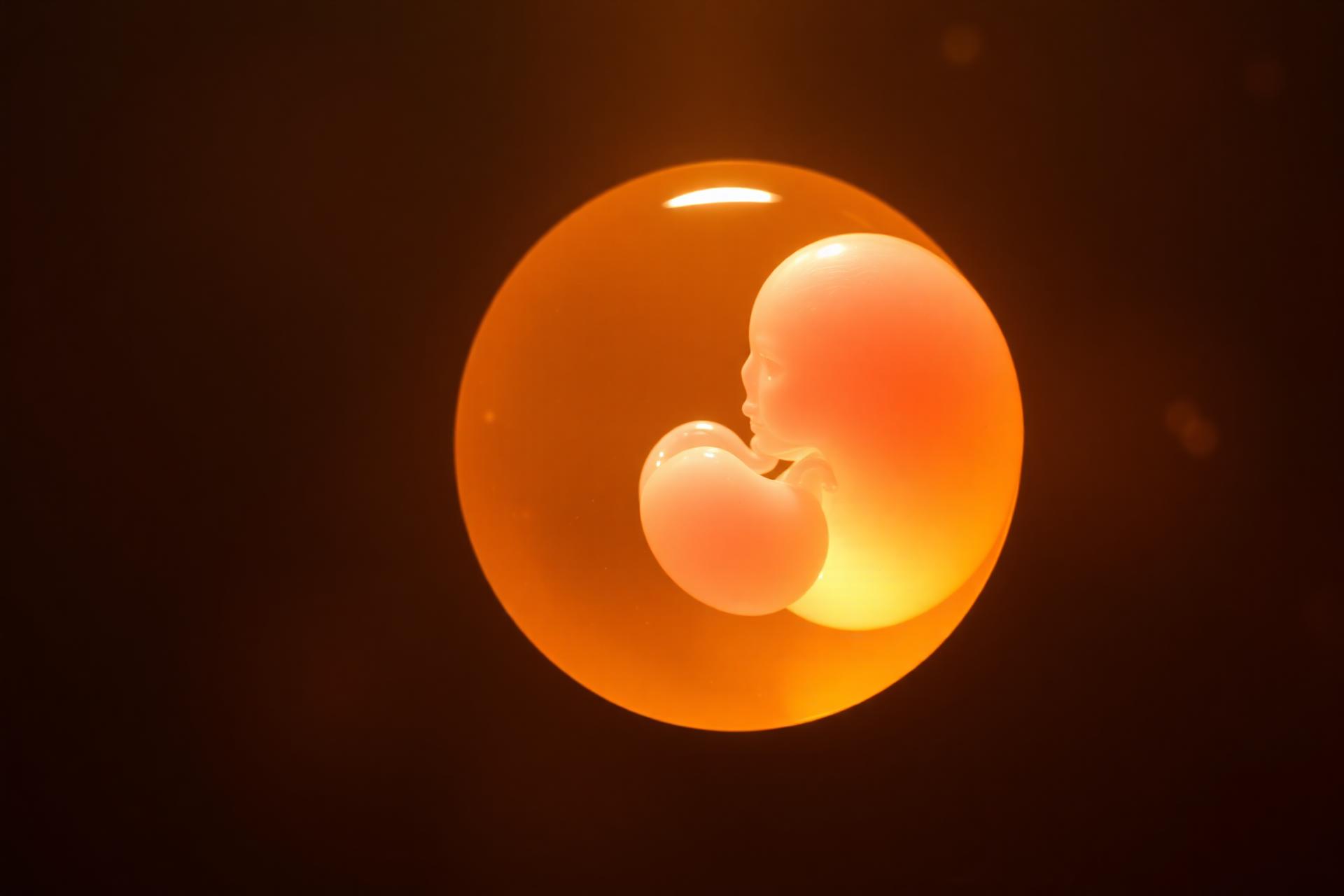
A Reflection · Qur'an · Embryology
The stages of becoming
Before microscopes, before ultrasound, before the discovery of the cell — a sequence of words named the first weeks of human life with a precision modern embryology still cites.
Keith Moore, 1983
Canadian anatomist Keith Moore — author of one of the world's most-used embryology textbooks — said the Qur'an's description of embryonic stages was in agreement with modern science.
He proposed that the Qur'an's terms — nutfah (drop), ʿalaqah (clinging clot), mudghah (chewed lump), then bone clothed in flesh — corresponded with stunning accuracy to the zygote, the implanting blastocyst, the somite-stage embryo, and skeletal myogenesis.
Who described the womb before anyone could look inside it?
Seven words, six weeks
Then We developed it into another creation.
Seven Arabic words name a sequence modern embryology only reconstructed in the 19th and 20th centuries. The clinging stage matches implantation. The somite stage looks, under microscope, exactly like something chewed. Skeletal precursors form before muscle wraps them. And then — the verse pauses — 'another creation' begins, the moment a fetus first stirs.
01
Zygote · day
1
02
Implantation
6–10 d
03
Somite stage
20–30 d
04
Skeletal formation
wk 5–6
05
Muscles wrap bones
wk 7–8
06
First movement
wk 8
The drop in safety
A drop, placed in a firm lodging.
The zygote, fertilized in the fallopian tube, descends and implants into the uterine wall — a "firm lodging." Without this step, no pregnancy continues.
The Qur'an names the journey: from a drop, to a place of safety.
ثُمَّ جَعَلْنَـٰهُ نُطْفَةًۭ فِى قَرَارٍۢ مَّكِينٍۢ
“Then We placed him as a sperm-drop in a firm lodging.”
The clinging clot
Then a clinging form, then a chewed lump.
The Arabic ʿalaqah means "that which clings" — and also resembles a leech. Under microscope, the 24-day human embryo looks startlingly like a leech, suspended and clinging in the uterine lining.
The next word, mudghah, means "a chewed lump." Photographs of the somite-stage embryo show pronounced bite-like ridges. The naming is not metaphor. It is observation before the instrument.
ثُمَّ خَلَقْنَا ٱلنُّطْفَةَ عَلَقَةًۭ فَخَلَقْنَا ٱلْعَلَقَةَ مُضْغَةًۭ فَخَلَقْنَا ٱلْمُضْغَةَ عِظَـٰمًۭا فَكَسَوْنَا ٱلْعِظَـٰمَ لَحْمًۭا
“Then We made the drop into a clinging clot, and the clinging clot into a chewed lump, and the lump into bones, and We clothed the bones with flesh.”
Another creation
Then We brought it forth as another creation.
The verse pauses. After bones and flesh, the language shifts: "another creation." A transition no microscope can fully capture — when biology turns into a self.
And it closes with the only verse in the Qur'an where God praises Himself in this exact phrase: fa-tabāraka-llāhu aḥsanu-l-khāliqīn — Blessed is God, the best of creators.
ثُمَّ أَنشَأْنَـٰهُ خَلْقًا ءَاخَرَ ۚ فَتَبَارَكَ ٱللَّهُ أَحْسَنُ ٱلْخَـٰلِقِينَ
“Then We developed him into another creation. So blessed is God, the best of creators.”
Reflection
You were once a verse.
Before the ultrasound. Before the textbook. Before your name. Each of us moved through these stages once. The Qur'an did not invent embryology. It noticed it — and named it back to us.