A Reflection · Qur'an · Oceanography
The two seas that do not transgress
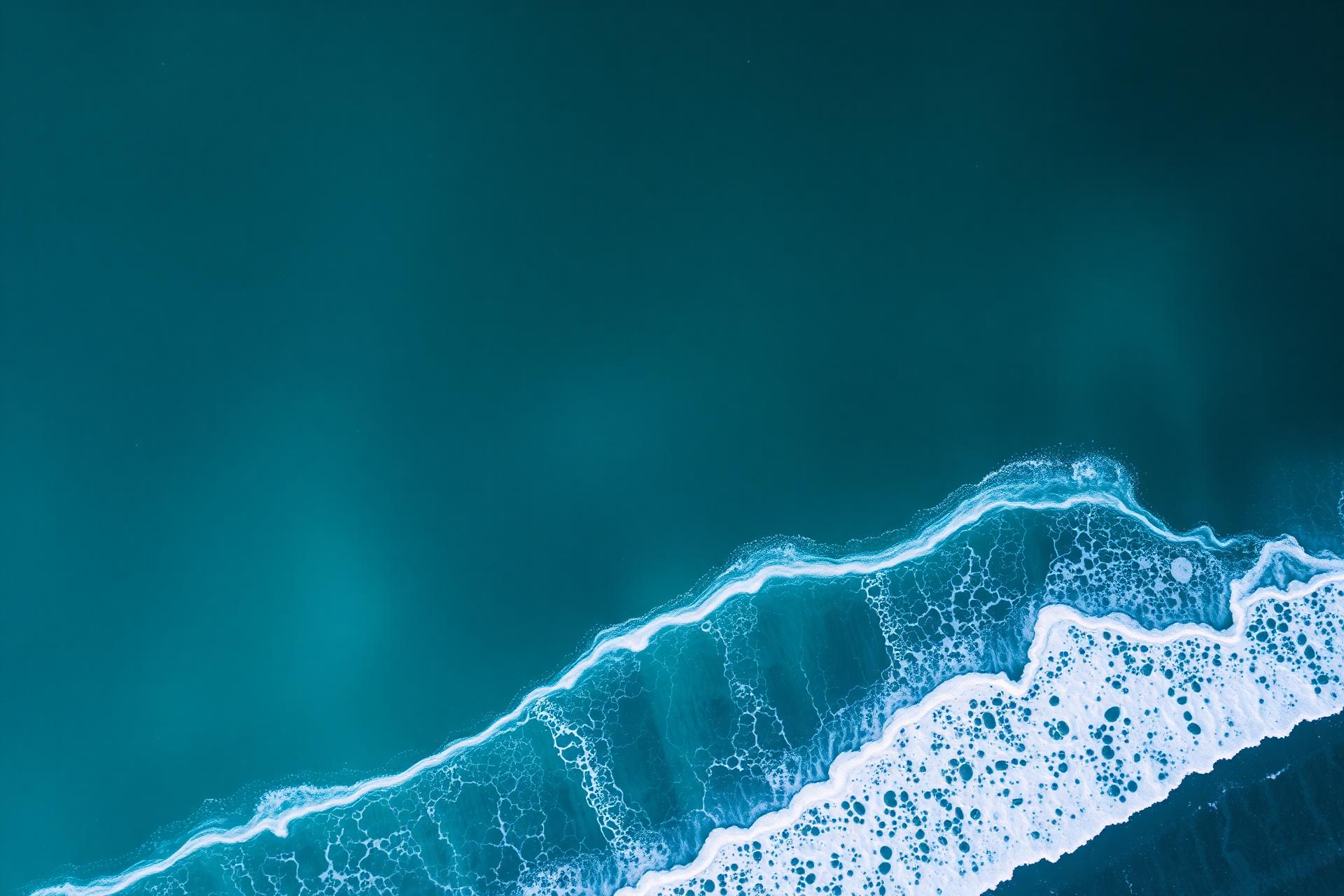
Where the Atlantic meets the Mediterranean, where the Amazon meets the sea, where two currents touch — a wall the eye can see but the hand cannot feel. The Qur'an named the barrier first.
The Cousteau remark
Diving the Strait of Gibraltar, Jacques Cousteau reportedly remarked that he had found a place where two seas refused to mix.
Oceanographers since have documented the phenomenon in detail: differences in salinity, temperature, and density create a surface tension and an underwater wedge that keeps two adjacent bodies of water — Atlantic and Mediterranean, fresh river and salt sea — separated for hundreds of kilometers.
What is the barrier that keeps each in its name?
Barzakh — the partition
Between them, a barrier they do not cross.
The Arabic barzakh means a partition or isthmus. Modern oceanography identifies pycnoclines, haloclines, and thermoclines — invisible density walls that prevent vertical mixing. At surface convergences, satellite imagery shows the boundary as a clear seam in foam. The verse names not only the seas but the rule that keeps them in name.
01
Atlantic salinity
~36 g/L
02
Mediterranean
~38 g/L
03
Halocline gap
Δ 2–4 g/L
04
Wedge length
~100 km
05
Amazon plume
200 km offshore
06
Surface seam visible
from orbit
The meeting
He released the two seas, meeting.
Two bodies of water meet. They touch. They flow into each other's basin. The verse calls this marajja — releasing one into the other.
And then a second word: between them is a barzakh. A partition. They meet and do not become one.
مَرَجَ ٱلْبَحْرَيْنِ يَلْتَقِيَانِ بَيْنَهُمَا بَرْزَخٌۭ لَّا يَبْغِيَانِ
“He released the two seas, meeting [side by side]; between them is a barrier they do not cross.”
Sweet and salty
One sweet and palatable, one salty and bitter.
The verse goes further — describing two distinct types of water: fresh-sweet, and salty-bitter. Estuarine science describes exactly this: a salt wedge slides beneath a river outflow, separated by a halocline.
The Amazon River pushes fresh water more than 200 km out to sea before the Atlantic finally absorbs it. From orbit, the boundary is a stripe of two browns.
وَهُوَ ٱلَّذِى مَرَجَ ٱلْبَحْرَيْنِ هَـٰذَا عَذْبٌۭ فُرَاتٌۭ وَهَـٰذَا مِلْحٌ أُجَاجٌۭ وَجَعَلَ بَيْنَهُمَا بَرْزَخًۭا وَحِجْرًۭا مَّحْجُورًۭا
“It is He who released the two seas — one fresh and palatable, the other salty and bitter — and placed between them a barrier, a prohibiting partition.”
The treasures of the meeting
From both come out pearl and coral.
Where two seas meet — at estuaries, mangroves, and reef interfaces — biodiversity spikes. These are among the most productive ecosystems on Earth.
The verse names this fertility precisely: from both, ornaments come out. From the meeting of opposites, life multiplies.
يَخْرُجُ مِنْهُمَا ٱللُّؤْلُؤُ وَٱلْمَرْجَانُ
“From both of them come out pearl and coral.”
Reflection
Even the seas know their names.
There is a kind of meeting that does not require dissolving. The verse holds it up as a sign — and a possibility.